
Natural Haircare Tips That Work: A Simple Routine That Pays Off in Truescore.
Natural Haircare Tips That Work
Nowadays, beauty and wellness realities require natural hair care activities that are simple and do not involve destructive chemicals. If ever you’ve wondered how to make your hair healthier and stronger in a natural way. These established methods are about to be revealed. These methods have been tested in the field of time, have served numerous generations. And are backed by those who believe that nature’s remedies can be the most effective. Limit yourself to simple techniques and provide no need for excessive, expensive treatments.
In the process, you’ll discover simple and effective ways to promote healthier hair without compromising simplicity or sustainability. Every strand of hair has a specific demand, and that’s why understanding personal requirements and appreciating the fact that organic regimes can help achieve long-term, eco-friendly health are essential. Let us investigate well-based techniques, coupled with experienced practice, learned knowledge, and true passion for promoting safer beauty practices.
Identify your hair type above everything.
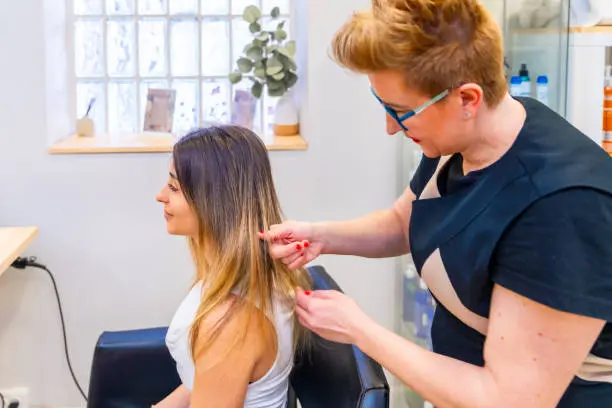
One of the most crucial but overlooked steps when starting on Natural Haircare Tips That Work is to figure out the specific hair type you have. Although it seems easy, many people apply natural ingredients without knowing it, as they are unaware of their particular hair needs. A person with fine hair and little porosity, like this person here, may not reap the benefits of heavy oils like castor oil on the same levels that someone with high-porosity hair might. Knowing your hair type is key to creating bespoke natural hair care procedures.
Your hair’s nature—curly, straight, coiled, or wavy—is fundamental to what products and techniques are best for you. The point is to try the products caressingly, see the effect, and adjust your routine if needed. Coconut oil could give smooth results to some hair types but be greasy for others. After figuring out the nature of your hair texture, it becomes easy to choose appropriate natural ingredients for your hair treatment.
Scalp Care Is Not Optional
A healthy scalp is the foundation for beautiful hair. Thinking about the scalp is equal to sowing seeds in poor soil and expecting rich, bright hair to sprout. Although people often wash their hair, it is impressive how often they ignore the scalp’s care. When used in appropriate quantities, tea tree and rosemary essential oils can help in removing excess oil and promoting circulation and even help stimulate hair growth. Rubbing your scalp with jojoba or grapeseed oils in standard weekly massage sessions is a great way to increase scalp comfort while taking care of the health of your entire follicle pack. Not only do they make your hair look better—they provide important nutrients straight to your hair follicles. The use of a clean and aroused scalp may change a dull growth into long, healthy hair.
Being hydrated in your hair does not go beyond drinking enough water.
Although you should drink lots of water, moisturizing products are just as important for your hair. A spritz of your hair with aloe vera juice and distilled water left in has the potential to do wonders to your hair. When styling or simply tossing your head, spritz your hair with a little mist to fight dryness. In the situation of adverse weather conditions, this step suddenly becomes very important. To achieve the best results, moisten the hair by applying a conditioner or oil, referred to as LOC or LCO depending on hair type. Such practices can be traced in different cultures and have been practiced for long generations. Hydration of your strands increases their strength, enhances elasticity, and makes styling much easier. Remember that dry hair is an indication that the hair needs more moisture.
Protective styles are functional beyond just a fad.
Many people turn to the protective styles as they provide them with a relevant means of realizing their goals. Braiding, twisting, bunning, and the application of silk wraps are useful techniques for reducing hair handling and protection against environmental danger. When applied carefully, protective styles have the potential to maintain length and increase overall health.
Choose agents without sulfates or silicones.
Proper choice of the products is crucial for natural hair care. One of the most important steps in getting the best results is to read and analyze the ingredients they list on product labels carefully. Avoid taking sulfates and deep silicones in shampoos. This slight change can bring about great results in time.
Trimming A Simplemanship That Is Often Neglected.
There is a common fallacy in hair care whereby one is likely to lose their styling results if they trim. For example, one of the best ways to take care of your hair is by regular trims. Split ends do not apply to oils and creams—they need to be cut out. If you ignore this issue, it will only weaken and deteriorate them more down your hair shaft. Trimming pays less attention to the length than to the hair’s health. Trimming your hair 3-4 times over six months or so, or when necessary, will support the ends, balance growth, and lessen tangles. Consider TRIM as a path to better results. Regardless of how well organized your routine is, destroyed tips can’t repair themselves, so remain proactive.
Nutrition Supports Hair From Within
Good internal health is essential for proper hair care. All that you need to do is just observe your diets in terms of nutrient-rich food. Additional internal support for your hair can potentially be gained through drinks from herbs such as nettle and horsetail. The foods you consume daily are the basis of stronger and healthier hair in the future. Although there is no magical remedy, enriching your diet with balanced nutrition helps keep healthier hair.
Gentle Detangling Preserves Growth
Gentle stroking or combing tangled hair is a common occurrence, but it may cause injury. Instead, it is preferable to untangle your hair gently and with great care. It would be better for you to use your fingers or a wide-tooth comb rather than a brush. Try to detangle your hair when it is damp and apply conditioner or detangling spray. Begin at the bottom of your hair and work your way up, removing tangles one by one.
Gently approaching detangling helps reduce breakage, and it protects the overall length of your hair. Based on anecdotal evidence, it appears that many people blame hair loss on environmental conditions rather than on the harshness of their detangling routines. Consider this a vital aspect of your self-care routines, but not something hasty. Such small changes like these can have disproportionate consequences over time through consistent application.
Following routines is consistently your most important asset.
At the end of the day, their success depends on how committed you are to adopting them. Changing your products, routines, or trends without letting hair get used to the change can result in aggravation and end in aggravation. The real transformation happens slowly. Basic hair care is what makes an actual difference, and keep in mind that impressive changes won’t happen overnight. Your hair enjoys a routine; hair is not cut once it matures, but instead it is cut at an early stage when it is contaminant-free. Good recommendations can’t substitute steady, constant effort on your present regimen.
Conclusion: A slow pace is a good thing, and enjoy the journey.
To achieve healthy and thriving hair using natural means, patience is a virtue, because it is a process that appreciates dedicated effort, keen observation, and knowledge of what your hair needs. The pursuit of natural haircare tips that work requires greater determination and hard work as opposed to ad hoc solutions. With so many ‘miracle cure’ products available, it is wise to stick to the proven and the simple and the experience of your own self to achieve the optimal outcomes. Remember that people’s hair reacts to treatments in different ways. Pay close attention to the way your hair reacts, ask questions when necessary, and ensure you continue taking constant care of your hair. Take care of your hair along with the attention you have for your overall physical andntal well-being.
FAQs
From about 4 to 6 weeks, you may start to see better results if you use Natural Haircare Tips That Work regularly is it?
Such a constant adherence to your routine will most likely lead to some significant upgrades in texture, strength, and hydration within a period of 2-4 months. Notable advancements, such as hair growth, could take a longer period, especially when you had already lost hair before and you’re overall health is not at its best.
Can I include different natural haircare tips that work into my routine?
Yes, but be mindful. By positively introducing new ingredients to your hair, you can see the effect each one causes on your hair. If you attempt to apply a large number of treatments simultaneously, it can be difficult to tell which ones work best for your hair.

Laissez votre commentaire